By Matthew Littlewood
The kakī, reared in captivity at the Department of Conservation’s (DOC) Twizel facility and the Isaac Conservation and Wildlife Trust in Christchurch, were from eggs collected from both wild and captive breeding pairs as part of the Kakī recovery programme.
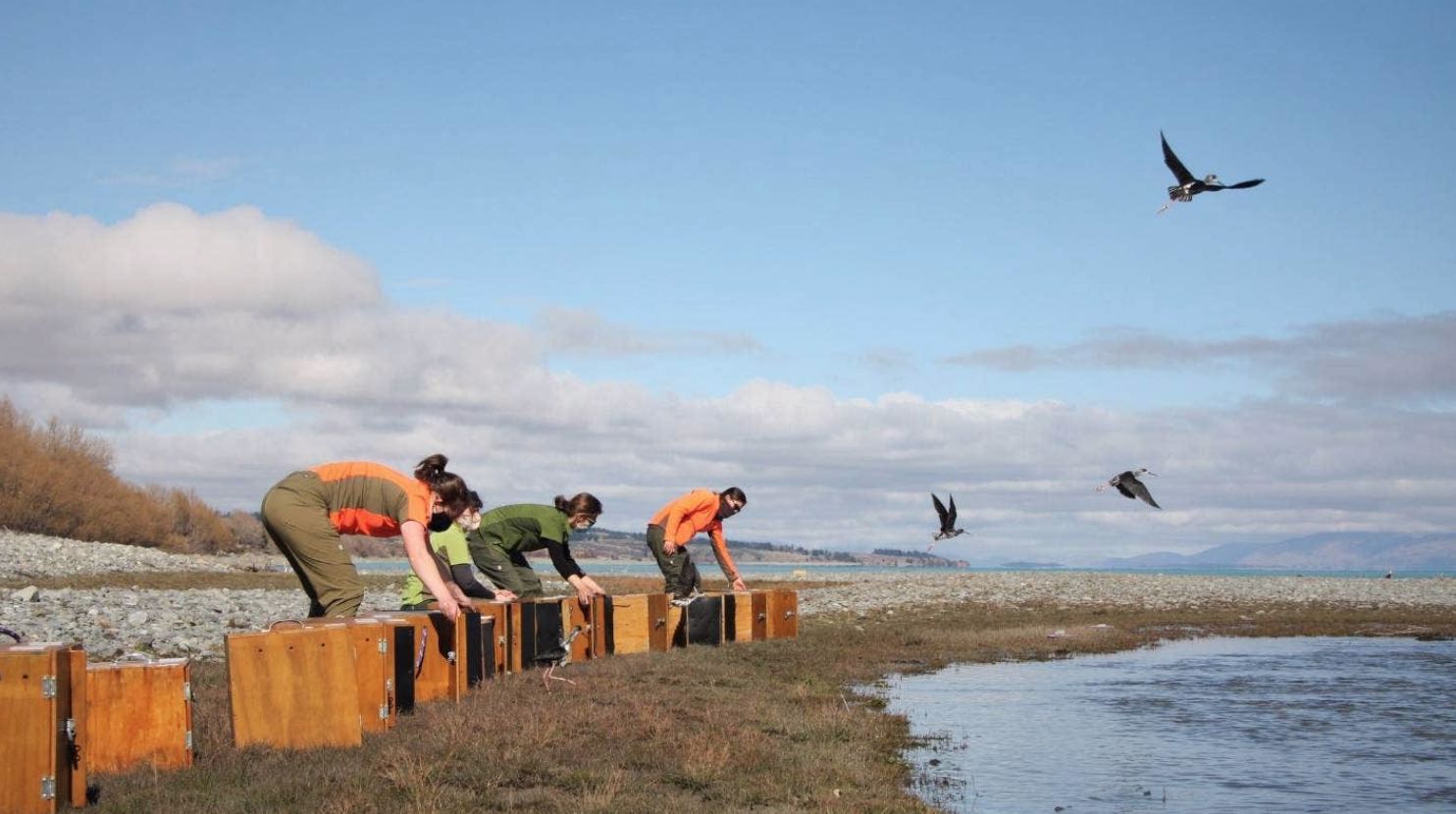
Two of the releases went ahead in the Tasman and Godley rivers before the Covid-19 lockdown came into effect but DOC staff were given special permission for a third release on Monday while the country was at alert level 4 because of serious welfare risks to the birds.
DOC kakī team leader Claudia Mischler said the birds had reached a stage where they had become aggressive in the limited space of the brooding facility which was causing stress that could have had serious health implications, and they needed to be released as soon as possible.
“Like the rest of New Zealand, DOC staff are staying home to stop the spread of Covid-19 and save lives, so our field work is currently on hold.
“In this case, the decision was made to go ahead with the kakī release because the risk to staff and the community was low and a release needed to take place for the welfare of these special birds, which are important to the future of the species.”
Mischler said five key DOC staff were able to do the work in two small bubbles that remained socially distanced throughout the release.
“Some staff were already in a bubble together to care for the kakī in captivity. Masks were also worn and other precautions were taken, such as regular use of hand sanitiser.
“After a great year of raising chicks, it was rewarding to see so many birds released back into the wild to add to the growing population.
“This is the second-best year on record for breeding in the wild. 175 eggs were collected this season, while another 66 were left to hatch in their nests.”
Mischler said 39 wild breeding pairs of kakī were identified this season, the most on record and more than 150 juvenile kakī have been released into the wild this season.
“This season, 54 per cent of the wild breeding pairs laid eggs on private land. The success of the programme relies on support from landowners, who have really got behind efforts to protect these special birds and often let us know where they have been setting up nests.”
Te Manahuna Aoraki Project Manager Simone Smits said many landowners in the Mackenzie Basin are helping to protect kakī by allowing access for trapping, ensuring there is healthy wetland habitat and alerting DOC rangers when they spot nesting birds.
“Kakī are vulnerable to mammalian predators, so an extensive trapping network is a key part of the efforts to ensure the species’ survival,” Smits said.
Braemar Station owner Hamish Mackenzie said being involved in Te Manahuna Aoraki “has meant we are working together as partners, and we are really enjoying seeing more kakī around”.
“To be able to say you have the rarest wading bird in the world living and breeding on your property is really exciting,” Mackenzie said.
Since 2018, Te Manahuna Aoraki has installed more than 2000 traps in the Tasman, Cass, Godley and Macauley river valleys and predator trapping has been extended across 80 per cent of the kakī range.
The extra traps added to DOC and Project River Recovery’s (Meridian Energy and Genesis Energy) existing network in the Tasman River increasing the trapping network from 26,000 hectares to more than 60,000ha.